Blog

Top Mini Quad Motors: Choosing the Right Option for Your Drone
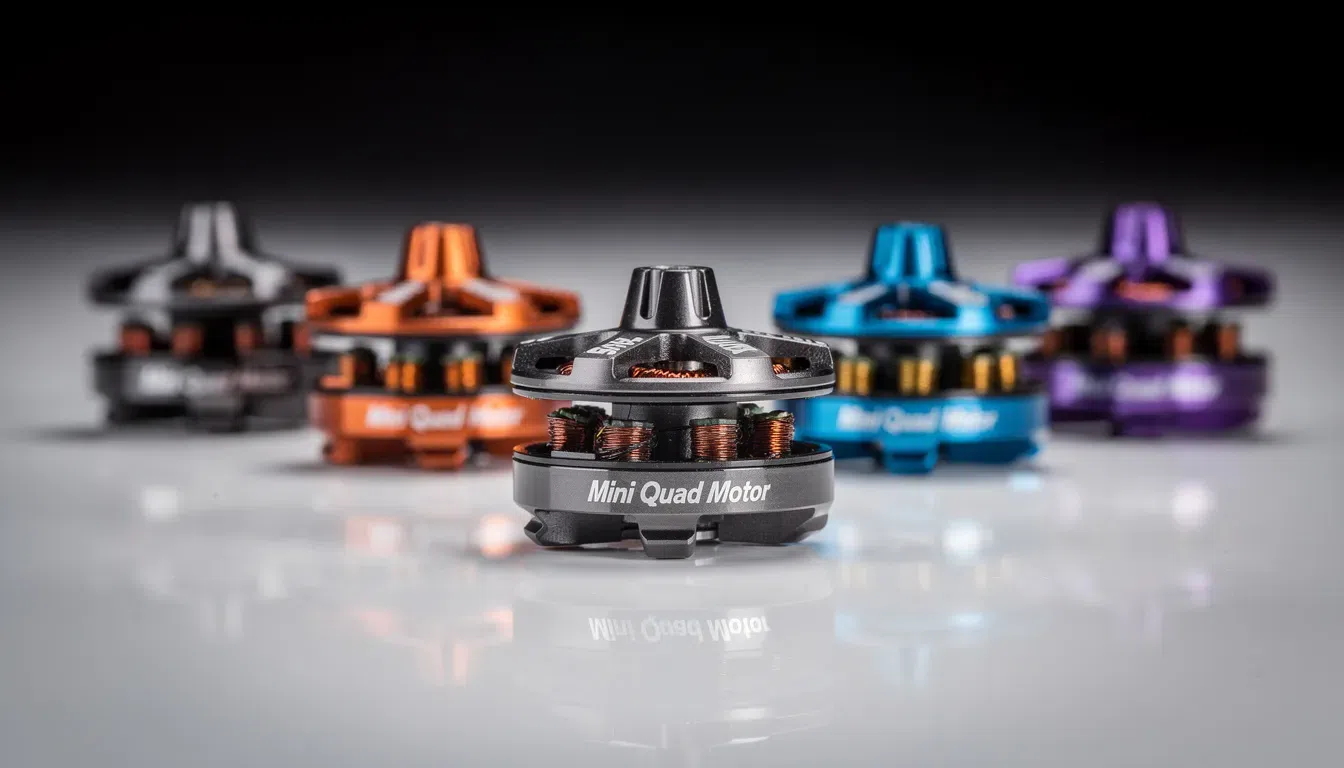
Mini quad motors play a crucial role in FPV drones, directly impacting their performance, efficiency,


Choosing the right FPV motor is one of the most important decisions in any drone build. The motor affects acceleration, flight time, throttle feel, top speed, battery draw, heat, and how stable your drone feels in the air.
For most FPV pilots, the best motor is not simply the one with the highest KV or the biggest stator. The right choice depends on your frame size, propeller size, battery voltage, flying style, and all-up weight.
This guide explains how to choose FPV motors for racing, freestyle, cinematic, and long-range drones, with a practical motor size chart you can use before buying.

Use this chart as a starting point when matching motor size, propeller size, and KV range.
| Drone Type | Common Prop Size | Common Motor Size | Typical KV Range | Best For |
|---|---|---|---|---|
| Tiny FPV drone | 2 inch | 1102–1104 | 6000KV+ | Indoor flying, micro racing |
| 3-inch FPV drone | 3 inch | 1104–1505 | 4000KV+ | Lightweight freestyle, compact builds |
| 4-inch FPV drone | 4 inch | 1404–1806 | 3000KV+ | Efficient cruising, light freestyle |
| 5-inch FPV drone | 5 inch | 2207, 2306, 2208 | 1700–2600KV | Racing, freestyle, daily FPV |
| 6-inch FPV drone | 6 inch | 2306–2507 | 1500–2200KV | Smooth freestyle, heavier builds |
| 7-inch FPV drone | 7 inch | 2507–2807 | 1200–1800KV | Long-range FPV, cinematic cruising |
| 10-inch+ drone | 10 inch or larger | 2814+ | Lower KV | Payload, cinematic, heavy-lift UAVs |
These ranges are general recommendations. Always check your motor, ESC, propeller, and battery compatibility before flying.
FPV motors control how quickly your drone reacts to throttle input. A good motor setup gives your drone clean acceleration, stable cornering, predictable handling, and enough thrust to recover from dives or aggressive maneuvers.
A poor motor choice can cause several problems:
The goal is to build a balanced system, not just a powerful one. Your motor, propeller, battery, ESC, and frame should work together.
The easiest way to choose an FPV motor is to start with your frame and propeller size.
A small frame can only use small props, so it usually needs a smaller, higher-KV motor. A larger frame can spin larger props, so it usually needs a bigger stator and lower KV for better torque and efficiency.
The 5-inch FPV drone is the most common choice for racing and freestyle. Most 5-inch builds use motors such as 2207, 2306, or 2208.
For 5-inch drones:
A 5-inch racing or freestyle drone often works well with a 2207-class motor. For example, a 1960KV 2207 motor can be a good match for modern 5-inch FPV setups, especially when paired with the right battery voltage and propeller pitch.
A 6-inch or 7-inch drone usually focuses more on efficiency, stability, and flight time than pure racing speed. These builds often use lower-KV motors with larger props.
For 6-inch and 7-inch drones:
A 2807-class motor can be a strong option for 6–7 inch builds because it provides more torque for larger propellers while still keeping the setup efficient.
KV tells you how fast a motor spins per volt with no load. A higher KV motor spins faster. A lower KV motor spins slower but usually provides more torque for larger propellers.
A simple way to think about it:
For example, a 1900KV motor on a 6S battery can spin at a much higher theoretical RPM than the same motor on a 4S battery. This is why KV should always be considered together with battery voltage.
Battery voltage has a major impact on motor speed. Many FPV pilots choose between 4S and 6S batteries.
A 4S battery has lower voltage, so 4S builds often use higher-KV motors to reach the desired RPM.
Common choices for 5-inch 4S builds:
These motors can feel fast and responsive, but they may draw more current and reduce flight time if paired with aggressive props.
A 6S battery has higher voltage, so 6S builds usually use lower-KV motors.
Common choices for 5-inch 6S builds:
A 6S setup often feels smoother and more efficient when tuned correctly. It can also reduce current draw compared with a high-KV 4S setup.
Motor size numbers describe the stator diameter and stator height. For example, a 2207 motor has a stator that is about 22 mm wide and 7 mm tall.
The stator affects torque, power, weight, and heat.
A larger stator usually provides:
But it can also add weight and increase power draw.
A smaller stator usually provides:
But it may feel weak if your drone is heavy or your propeller is too aggressive.
A good FPV drone needs enough thrust to fly safely and respond quickly.
A simple rule:
For example, if your drone weighs 700 grams ready to fly, a 2:1 ratio means your motors together should produce at least 1,400 grams of thrust. For aggressive freestyle, you may want much more.
Do not choose a motor only because it produces the highest maximum thrust. Look at efficiency, current draw, heat, and how much thrust you actually need at normal throttle.
Different FPV pilots need different motor behavior.
For racing, you want fast acceleration, sharp throttle response, and strong punch out of corners.
Look for:
Racing pilots often accept shorter flight time in exchange for speed and responsiveness.
Freestyle pilots need a balance of power, control, and durability. The motor should feel smooth enough for flowy tricks but strong enough for dives, flips, and recoveries.
Look for:
For freestyle, avoid choosing a motor that is too aggressive for your skill level or frame weight. A smoother motor can make your drone easier to control.
Long-range FPV drones need efficiency, stability, and low heat. You are usually not trying to win a race. You want a setup that can cruise smoothly and use battery power efficiently.
Look for:
Long-range pilots should pay close attention to grams per watt, current draw, and motor temperature.
Cinematic FPV builds need smooth control and low vibration. The goal is not only speed, but stable footage and predictable handling.
Look for:
For cinematic drones, avoid overpowered setups that create unnecessary vibration or make the drone harder to fly smoothly.
The propeller can completely change how a motor feels.
A high-pitch prop can give more bite and speed, but it also increases load on the motor. A larger-diameter prop can improve thrust and efficiency, but it requires more torque.
Before choosing props, check:
Triple-blade props are common for 5-inch FPV because they provide strong grip and control. Two-blade props can be more efficient, especially on long-range builds.
Your ESC must handle the current your motors can draw. If your motor and propeller combination pulls more amps than your ESC can safely handle, you risk overheating or failure.
Before flying, check:
A safer setup leaves some headroom instead of running every component at its maximum limit.
A high-KV motor may look exciting, but it can overheat, drain the battery quickly, and make the drone harder to control if it does not match your propeller and voltage.
A propeller with too much pitch can overload the motor. If your motors are hot after a short flight, your prop choice may be too demanding.
Your drone’s all-up weight includes the frame, motors, flight controller, ESC, battery, camera, receiver, antenna, props, and any accessories. Choose motors based on the real ready-to-fly weight, not just the frame size.
A bigger motor is not always better. Extra motor weight can make your drone feel less agile and reduce flight time.
After a short test flight, land and check motor temperature. Warm is normal. Too hot to touch is a warning sign.
Retek offers FPV and brushless drone motors for different drone builds, including racing, freestyle, cinematic, long-range, and multi-rotor applications.
For compact racing and freestyle builds, the Badass Series is designed for fast throttle response and high-speed FPV applications. A motor such as the LN2207 can be a strong option for 5-inch FPV racing and freestyle builds.
For larger FPV, cinematic, and long-range builds, the Skyrush Series includes efficient brushless motors for larger propeller sizes and more stable flight. A motor such as the LN2807 can be considered for 6–7 inch setups that need efficient thrust and smooth control.
When comparing motors, look at:
If you are not sure which motor fits your drone, compare motors by frame size, propeller size, and battery voltage before ordering.
Before choosing FPV motors, ask these questions:
The best FPV motor is the one that matches your full build, not just the one with the most impressive specs.
Need help choosing the right motor? Compare Retek FPV drone motors by size, KV, propeller compatibility, and flying style, or contact Retek for motor selection support.
Most 5-inch FPV drones use 2207, 2306, or 2208 motors. A 2207 motor is a popular choice for racing and freestyle because it offers strong torque, good throttle response, and enough power for aggressive flying.
For 5-inch FPV drones, many 4S builds use higher KV motors, often around 2300KV to 2700KV. Many 6S builds use lower KV motors, often around 1700KV to 2000KV. The right choice depends on your propeller, flying style, and ESC setup.
Not always. Higher KV can give more speed, but it can also increase current draw, heat, and battery usage. Lower KV is often better for larger props, long-range flying, and smoother control.
A 7-inch long-range FPV drone usually works best with a larger, lower-KV motor, such as a 2507 to 2807 class motor. The goal is efficient thrust, low heat, and stable cruising rather than maximum RPM.
After a short test flight, carefully touch the motor. If it is warm, that is usually normal. If it is too hot to touch comfortably, your setup may be overloaded. Try a less aggressive propeller, lower throttle demand, or a better-matched motor and KV.
Yes. Your motors, ESCs, battery, and propellers must be matched correctly. If the motor and propeller combination draws more current than the ESC can handle, the ESC may overheat or fail.
Lightweight motors can improve agility and flight time, especially on small drones. However, a motor that is too small may lack torque and overheat. The best motor weight depends on your drone size, propeller, and flying style.
Choose a racing motor if you want fast acceleration, sharp throttle response, and high speed. Choose a long-range motor if you care more about flight time, smooth cruising, efficiency, and lower heat.

Mini quad motors play a crucial role in FPV drones, directly impacting their performance, efficiency,
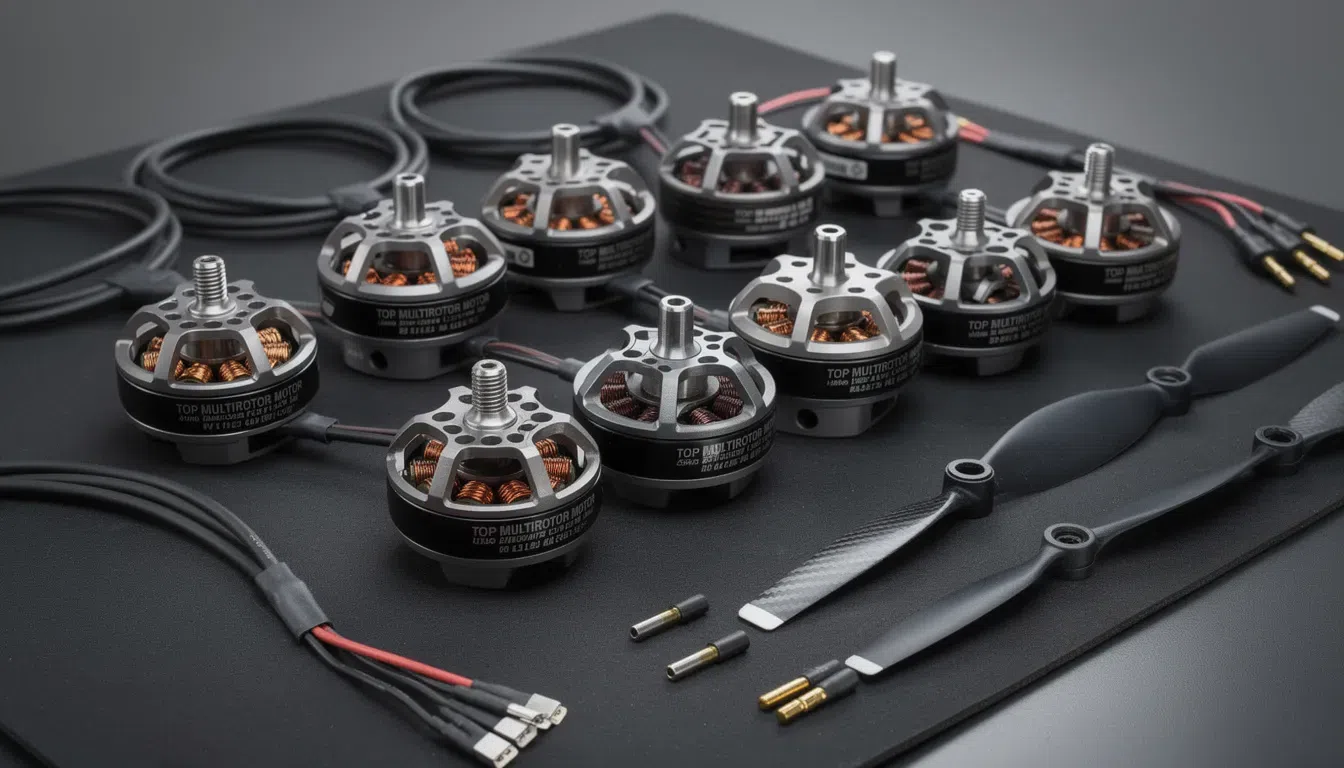
Introduction to Multirotor Motors This guide is designed for drone enthusiasts, builders, and professionals who
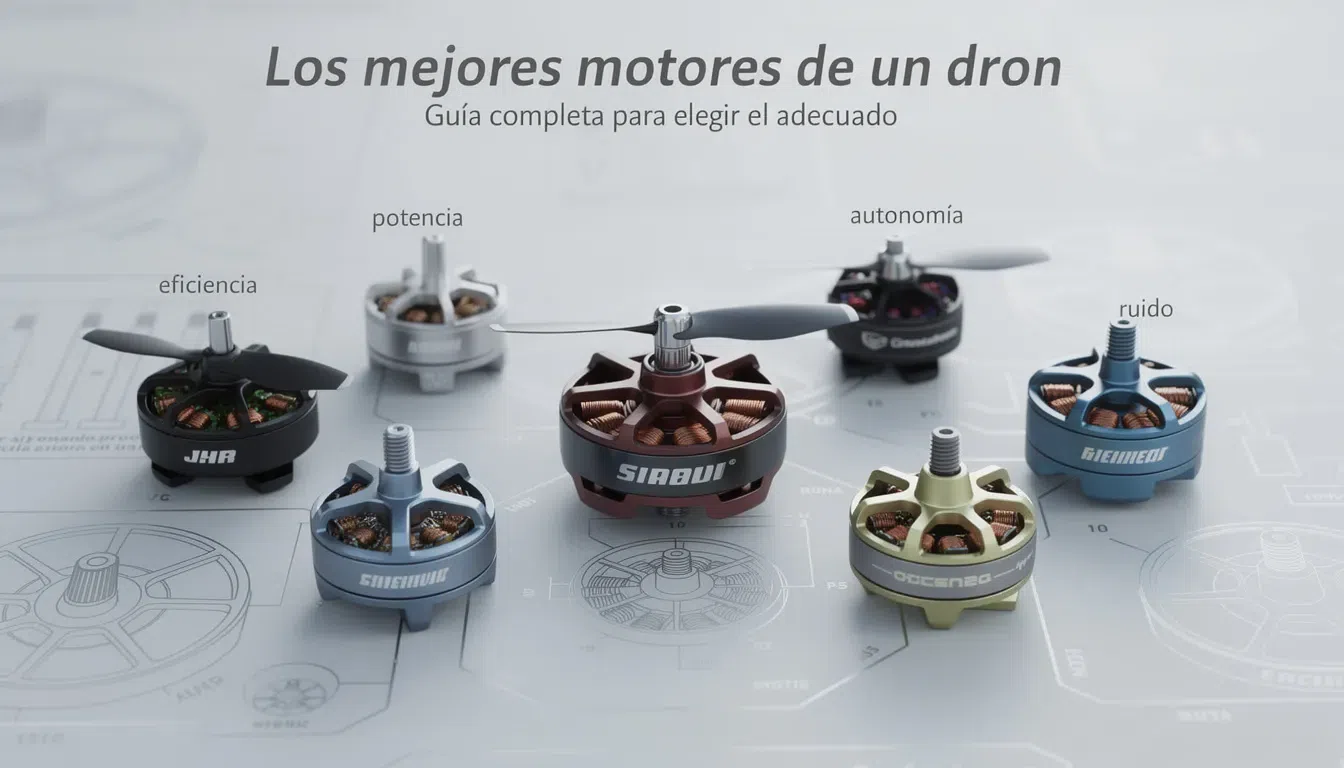
Los motores de un dron son piezas clave que afectan directamente la estabilidad del vuelo