Blog

Top Mini Quad Motors: Choosing the Right Option for Your Drone
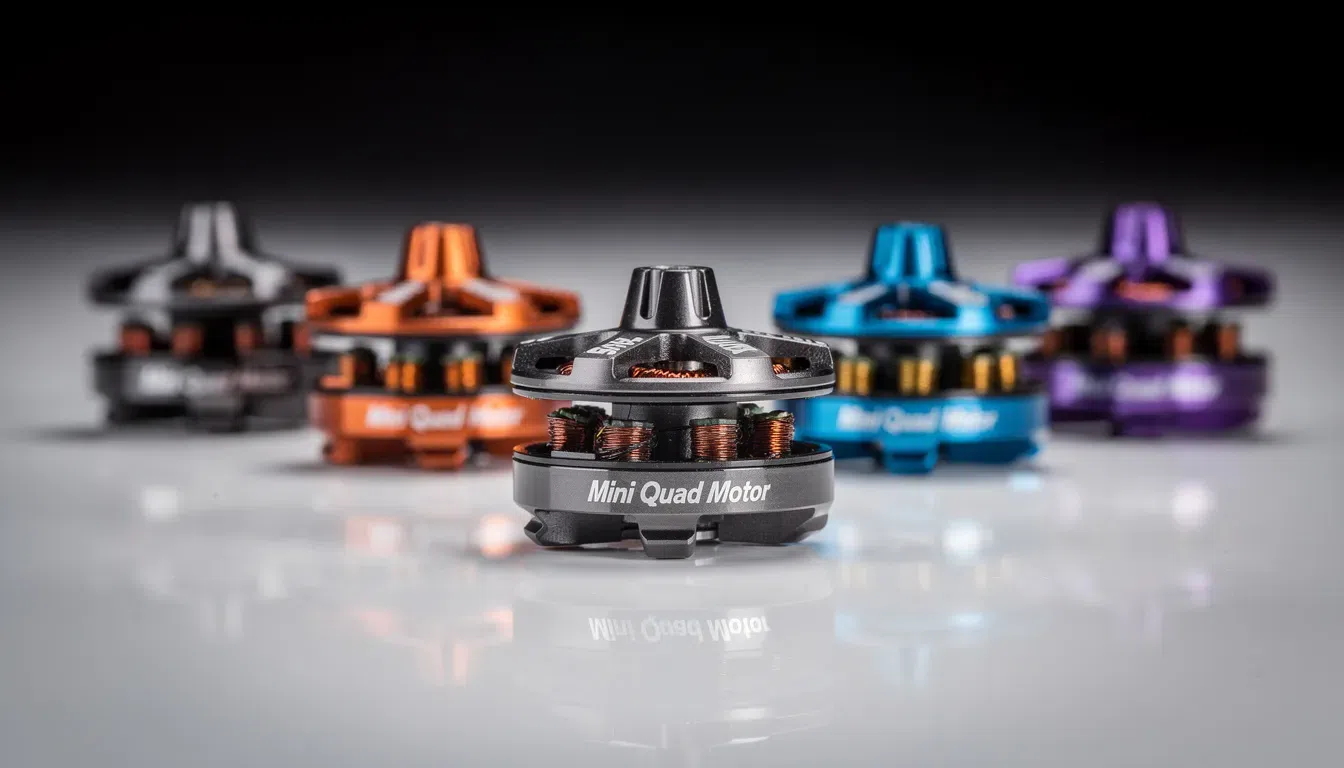
Mini quad motors play a crucial role in FPV drones, directly impacting their performance, efficiency,


Choosing the right FPV motor is one of the most important parts of building or upgrading a drone. Your motor affects acceleration, throttle response, flight time, stability, heat, and how your drone feels in the air.
The best FPV motor is not always the motor with the highest KV or the biggest stator. The right choice depends on your frame size, propeller size, battery voltage, flying style, and total drone weight.
This guide explains how to choose FPV motors for racing, freestyle, cinematic, and long-range drones, so you can make a better buying decision before ordering parts.
To choose the right FPV motors, start with these five steps:
For most 5-inch FPV drones, 2207 and 2306 motors are common choices. For 6-inch and 7-inch long-range builds, larger lower-KV motors are usually better because they provide more torque and efficiency for larger propellers.

Different FPV pilots need different motor behavior. A racing pilot, freestyle pilot, cinematic pilot, and long-range pilot should not always use the same motor.
Racing drones need fast acceleration, sharp throttle response, and strong punch-out. The motor should respond quickly when you change throttle and should be able to recover fast after turns, gates, dives, and hard maneuvers.
For racing FPV drones, look for:
Many 5-inch racing builds use 2207 or 2306 motors. Higher KV can give more speed, but it can also increase current draw and heat. For racing, choose power carefully. A motor that is too aggressive can drain the battery quickly and make the drone harder to control.
Freestyle drones need a balance of power, durability, and smooth control. You want enough thrust for flips, rolls, dives, and recoveries, but the drone should still feel predictable.
For freestyle FPV drones, look for:
A 2207-class motor is a popular option for 5-inch freestyle drones because it offers strong torque and responsive control without being too heavy for most builds.
Cinematic FPV drones focus on stable footage, smooth motion, and predictable flight. The motor does not need to be the most aggressive option. It should be smooth, efficient, and low-vibration.
For cinematic FPV drones, look for:
For cinematic builds, avoid choosing a motor only because it has high maximum thrust. Smoothness and consistency often matter more than top speed.
Long-range FPV drones need efficiency, stability, and low heat. The goal is to cruise farther, not to accelerate as hard as possible.
For long-range FPV drones, look for:
A 7-inch long-range build usually works better with a larger lower-KV motor than with a small high-KV racing motor. The larger motor helps spin bigger props more efficiently and keeps the drone stable during longer flights.
Your frame size determines what propeller size you can use. Your propeller size then helps determine what motor size you need.
A smaller FPV drone uses smaller props and usually needs smaller, higher-KV motors. A larger FPV drone uses bigger props and usually needs larger, lower-KV motors.
Here is a simple starting point:
| FPV Build Type | Common Prop Size | Common Motor Size | Typical Use |
|---|---|---|---|
| Micro FPV | 2 inch | 1102–1104 | Indoor flying, small park flying |
| 3-inch FPV | 3 inch | 1104–1505 | Lightweight freestyle |
| 4-inch FPV | 4 inch | 1404–1806 | Efficient cruising, light freestyle |
| 5-inch FPV | 5 inch | 2207, 2306, 2208 | Racing, freestyle |
| 6-inch FPV | 6 inch | 2306–2507 | Smooth freestyle, heavier builds |
| 7-inch FPV | 7 inch | 2507–2807 | Long-range, cinematic cruising |
Use this table as a starting point, not a fixed rule. The best motor still depends on your battery, propeller pitch, drone weight, and flying style.

Motor size numbers describe the stator diameter and stator height. For example, a 2207 motor has a stator that is about 22 mm wide and 7 mm tall.
The stator affects torque, power, motor weight, and heat.
A larger stator usually provides:
The tradeoff is that larger motors usually add weight and may draw more current.
A smaller stator usually provides:
The tradeoff is that a smaller motor may overheat or feel weak if the drone is heavy or the propeller is too aggressive.
For most 5-inch FPV drones, 2207 and 2306 motors are common because they provide a strong balance of torque, weight, and response.
KV tells you how many revolutions per minute a motor can spin per volt with no load. A higher KV motor spins faster. A lower KV motor spins slower but usually works better with larger props and higher voltage batteries.
A simple way to think about KV:
For example, a high-KV motor can feel fast on a 5-inch racing drone, but it may overheat if paired with a high-voltage battery and aggressive props. A lower-KV motor may feel smoother and more efficient, especially on 6S or long-range builds.
Battery voltage changes how fast your motor spins. This is why KV and battery voltage must be selected together.
A 4S battery has lower voltage than a 6S battery. Because of that, 4S builds usually use higher-KV motors to reach the desired RPM.
Common 5-inch 4S motor ranges include:
A 4S setup can feel very responsive, but high KV and aggressive props can increase current draw and reduce flight time.
A 6S battery has higher voltage, so 6S FPV builds usually use lower-KV motors.
Common 5-inch 6S motor ranges include:
A 6S setup can feel smoother and more efficient when matched correctly. It can also reduce current draw compared with a high-KV 4S setup.
For 7-inch long-range drones, lower KV is usually better because the drone uses larger props and needs efficiency more than extreme RPM.

The propeller has a major impact on motor performance. Even a good motor can perform badly if the propeller is wrong.
When choosing propellers, check:
A larger propeller needs more torque. A higher-pitch propeller adds more load to the motor. A triple-blade prop can give more grip and control, but it can also draw more current than a two-blade prop.
For racing and freestyle, many 5-inch pilots use tri-blade props because they provide strong grip and control. For long-range builds, two-blade or lower-pitch props may improve efficiency and flight time.
If your motor gets too hot after a short flight, your propeller may be too aggressive for that motor and battery combination.
Thrust-to-weight ratio helps you understand whether your drone has enough power.
A basic rule:
For example, if your drone weighs 700 grams ready to fly and you want a 2:1 thrust-to-weight ratio, your motors together should produce at least 1,400 grams of thrust. On a quadcopter, each motor would need to produce at least 350 grams of thrust.
For aggressive freestyle or racing, you may want more than that. But do not choose a motor only because it has the highest maximum thrust. Also check current draw, efficiency, heat, and control feel.
Your ESC must be able to handle the current your motors draw. If your motor and propeller combination pulls more amps than your ESC can safely support, you risk overheating, desyncs, or failure.
Before choosing motors, check:
A safe build leaves some current headroom. Do not design your setup so every component is always running at its maximum limit.
High KV can give more speed, but it can also increase heat, battery drain, and current draw. If your drone is heavy or your props are aggressive, very high KV can make the setup unreliable.
Large props and high-pitch props increase motor load. If your motors are hot after a short flight, try a less aggressive propeller.
A motor that works well on 4S may not be safe on 6S. When moving from 4S to 6S, you usually need a lower-KV motor.
Bigger is not always better. A motor that is too large can make your drone heavier, less agile, and less efficient.
Your drone’s real weight includes the frame, motors, flight controller, ESC, camera, receiver, antenna, battery, props, and accessories. Choose motors based on the complete ready-to-fly weight.
Retek offers FPV drone motors and brushless drone motors for racing, freestyle, cinematic, long-range, and custom drone builds.
For compact racing and freestyle FPV builds, the Badass Series is a good place to start. It includes motors designed for compact FPV racing drones, fast throttle response, and high-speed racing applications. A motor such as the LN2207 can be considered for 5-inch FPV racing and freestyle builds.
For larger FPV, cinematic, and long-range builds, the Skyrush Series provides efficient motor options for freestyle drones, long-range UAVs, cinematic builds, and multirotor applications. A motor such as the LN2807 can be considered for 6-inch or 7-inch builds that need torque, stability, and efficient thrust.
When comparing Retek motors, check:
If you are not sure which motor fits your drone, start with your frame size, propeller size, battery voltage, and flying style.
Before choosing FPV motors, ask these questions:
The best FPV motor is the one that matches your whole build. A balanced motor, propeller, battery, and ESC setup will give you better control, better reliability, and a better flying experience.
Need help choosing the right FPV motor? Compare motor size, KV, propeller compatibility, battery voltage, and flying style before making your final choice.
Most 5-inch FPV drones use 2207, 2306, or 2208 motors. A 2207 motor is a popular choice for racing and freestyle because it offers strong torque and responsive throttle control.
For 5-inch 4S builds, many pilots use motors around 2300KV to 2700KV. For 5-inch 6S builds, many pilots use motors around 1700KV to 2000KV. The right KV depends on your propeller, battery, ESC, and flying style.
Not always. Higher KV can give more speed, but it can also increase current draw, heat, and battery usage. Lower KV is often better for larger props, 6S setups, cinematic builds, and long-range drones.
For 5-inch freestyle FPV, 2207 and 2306 motors are common choices. Choose a motor with good torque, smooth throttle response, durable construction, and a KV range that matches your battery voltage.
Long-range FPV drones usually use larger lower-KV motors. For many 7-inch builds, motors in the 2507 to 2807 class are common because they provide enough torque for larger props and better efficiency for cruising.
Choose 4S if you want a simpler setup with higher-KV motors. Choose 6S if you want smoother power delivery, lower current draw, and better efficiency when matched correctly. Most 6S builds use lower-KV motors than 4S builds.
Signs of an overloaded motor include excessive heat, short flight time, high current draw, weak throttle response, vibration, or motor noise. Try using a lower-pitch propeller, checking your KV, or reducing overall drone weight.
Yes. Your ESC must handle the current your motors can draw with your chosen propeller and battery. Always check ESC current ratings and leave safety headroom.

Mini quad motors play a crucial role in FPV drones, directly impacting their performance, efficiency,
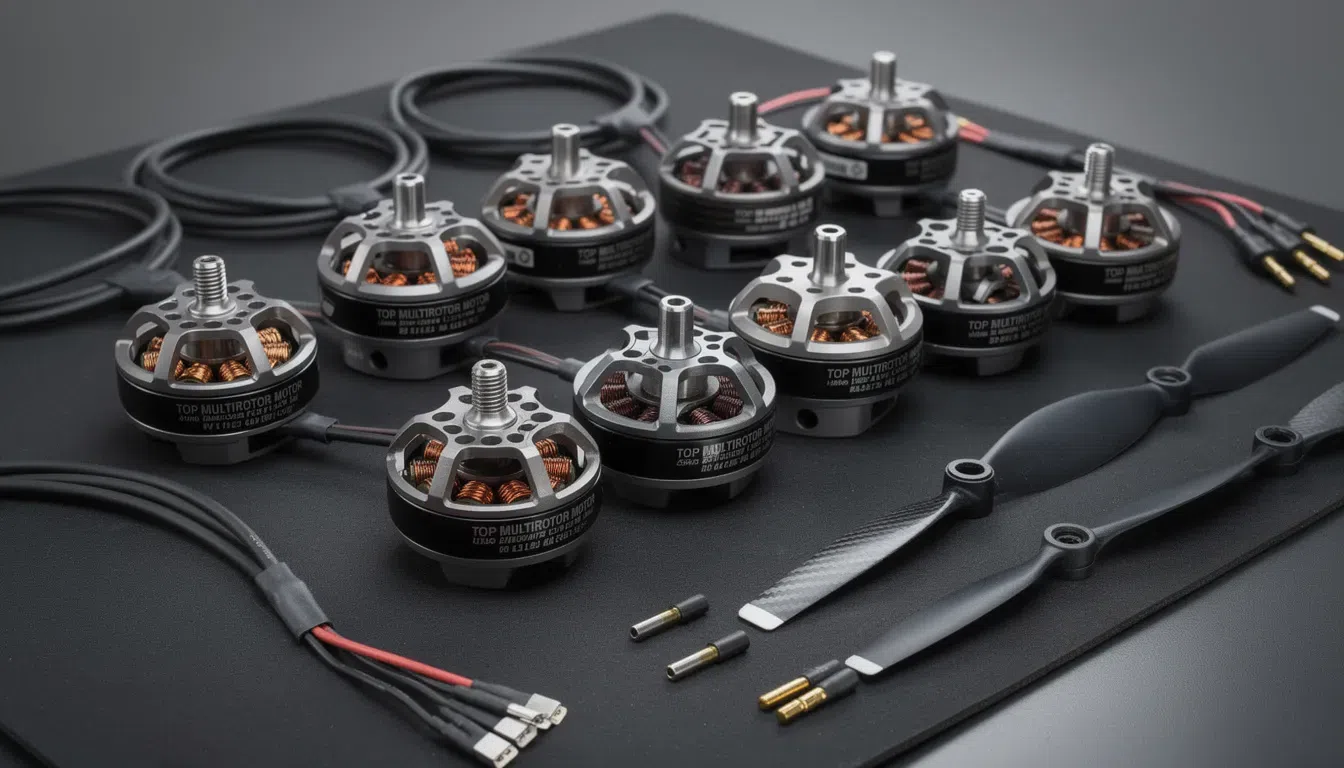
Introduction to Multirotor Motors This guide is designed for drone enthusiasts, builders, and professionals who
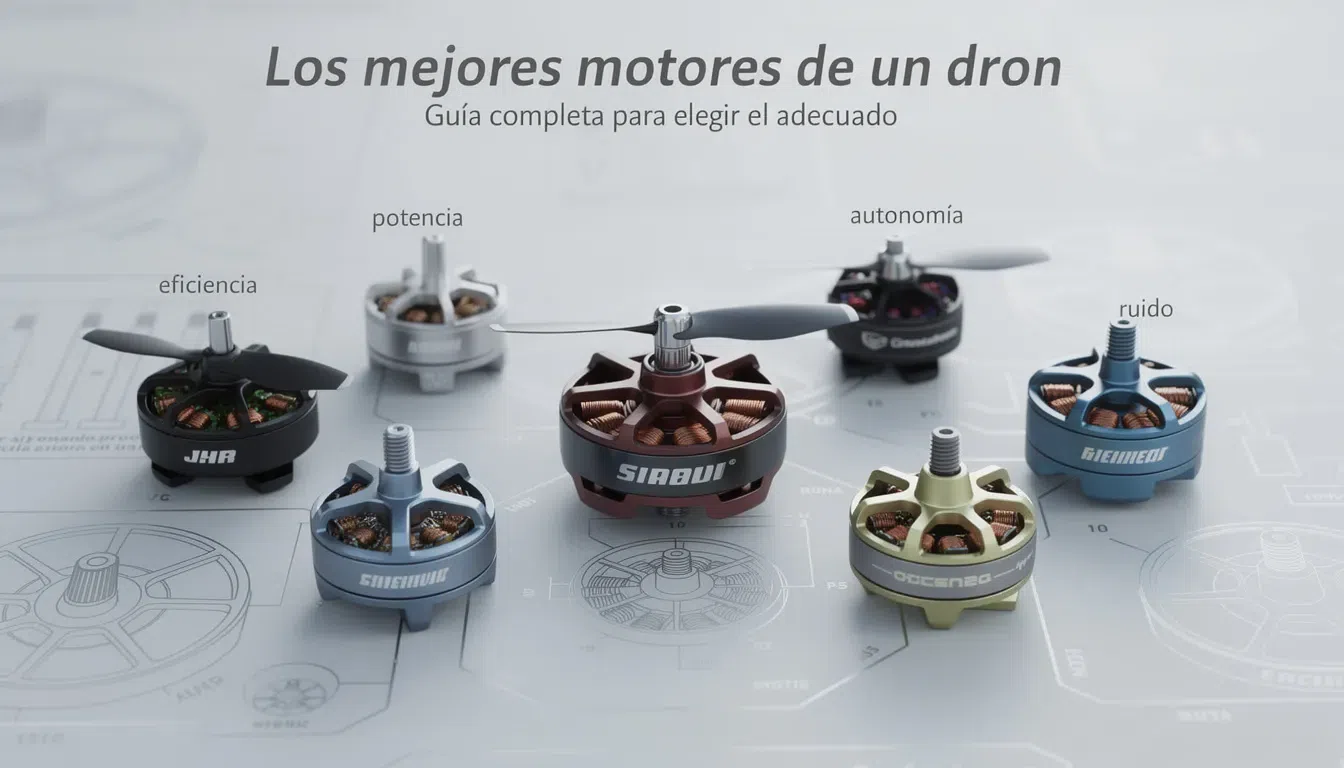
Los motores de un dron son piezas clave que afectan directamente la estabilidad del vuelo