Blog

Top Mini Quad Motors: Choosing the Right Option for Your Drone
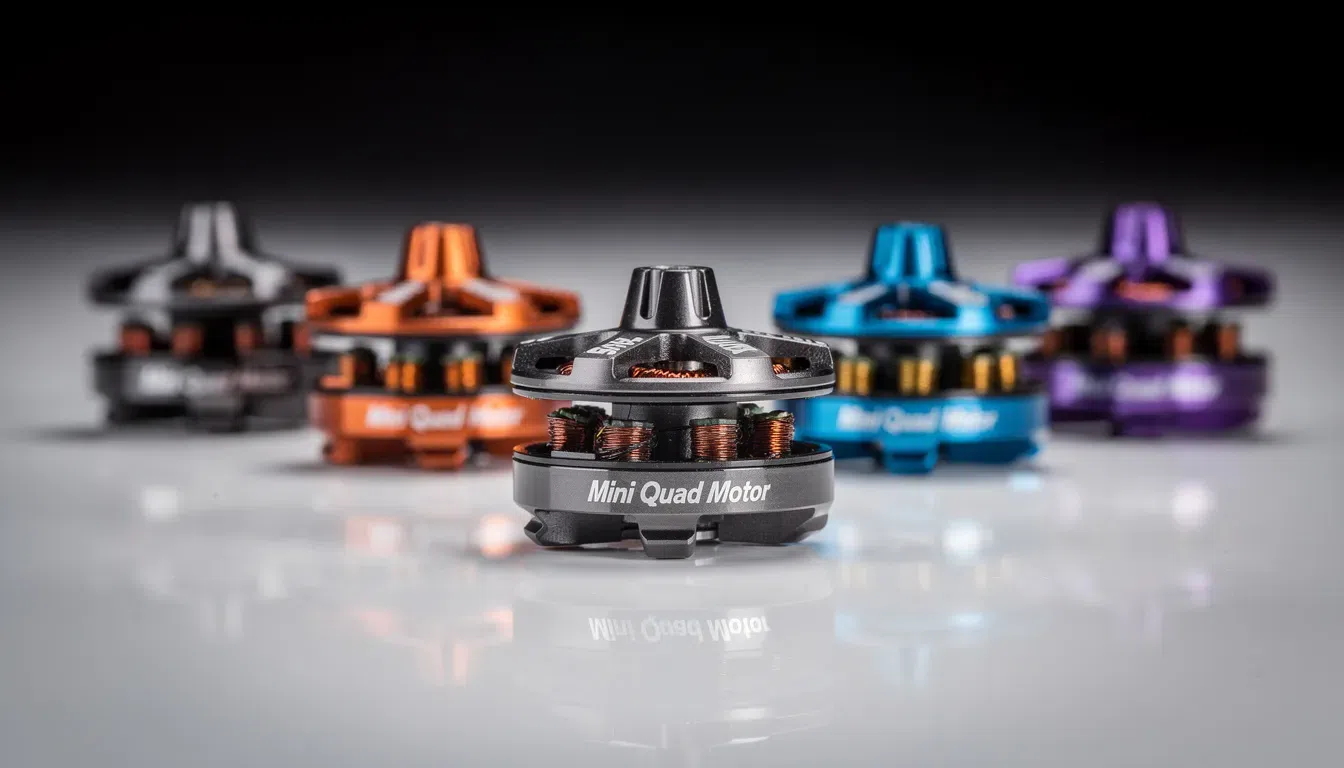
Mini quad motors play a crucial role in FPV drones, directly impacting their performance, efficiency,


When you compare drone motors, one of the first numbers you will see is the KV rating. A motor might be listed as 1800KV, 2100KV, 2600KV, or even higher. For FPV pilots and drone builders, understanding KV is essential because it affects speed, torque, battery choice, propeller size, heat, current draw, and flight time.
KV does not mean motor power by itself. A higher KV motor is not automatically better, and a lower KV motor is not automatically weaker. The right KV depends on your drone size, propeller size, battery voltage, flying style, and total build weight.
This guide explains what drone motor KV means, how it affects performance, and how to choose the right KV for racing, freestyle, cinematic, and long-range FPV drones.

Drone motor KV means revolutions per minute per volt with no load. In simple terms, KV tells you how fast a motor wants to spin for each volt supplied by the battery.
You can estimate no-load RPM with this formula:
RPM = KV × Voltage
For example, a 1800KV motor on a 10V battery has a theoretical no-load speed of about 18,000 RPM. A 2100KV motor on the same 10V battery has a theoretical no-load speed of about 21,000 RPM.
In real flight, the RPM will be lower because the propeller creates load. Still, KV is a useful starting point when comparing motors.
The easiest way to understand KV is to compare high KV and low KV motors.
| Feature | Higher KV Motor | Lower KV Motor |
|---|---|---|
| RPM | Spins faster per volt | Spins slower per volt |
| Torque Feel | Usually less suited for large props | Usually better for larger props |
| Best Propeller Match | Smaller props | Larger props |
| Battery Match | Often lower voltage setups | Often higher voltage setups |
| Flight Feel | Fast, sharp, aggressive | Smooth, efficient, controlled |
| Heat Risk | Higher if mismatched | Lower when matched correctly |
| Best For | Racing, lightweight builds | Long-range, cinematic, larger props |
Higher KV gives more RPM potential, which can help with speed and quick response. Lower KV usually works better with larger propellers, higher voltage batteries, and more efficient cruising.

Battery voltage is one of the biggest reasons KV matters. The same motor will spin faster on a higher voltage battery.
For example:
| Motor KV | Battery Voltage | Theoretical No-Load RPM |
|---|---|---|
| 1800KV | 4S, about 16.8V fully charged | About 30,240 RPM |
| 1800KV | 6S, about 25.2V fully charged | About 45,360 RPM |
| 2100KV | 4S, about 16.8V fully charged | About 35,280 RPM |
| 2100KV | 6S, about 25.2V fully charged | About 52,920 RPM |
This is why 6S FPV builds usually use lower KV motors than 4S builds. A KV that feels normal on 4S may spin too fast on 6S if the motor, propeller, ESC, and tune are not designed for it.
For FPV drones, 4S and 6S are two common battery setups. Each works best with different KV ranges.
A 4S battery has lower voltage than a 6S battery, so many 4S builds use higher KV motors to reach the desired RPM.
Common 5-inch 4S KV ranges include:
These motors can feel fast and responsive, but they may draw more current and create more heat when paired with aggressive props.
A 6S battery has higher voltage, so 6S builds usually use lower KV motors.
Common 5-inch 6S KV ranges include:
A 6S setup can provide smooth power delivery and lower current draw when matched correctly. However, a high-KV 6S setup can overload the motor, ESC, or battery if the propeller is too aggressive.
Two common KV ratings in FPV motor discussions are 1800KV and 2100KV. Both can be used on 5-inch drones, but they feel different.
An 1800KV motor is commonly used on modern 6S 5-inch FPV drones. It offers a good balance of speed, control, efficiency, and heat management.
An 1800KV motor is often a good choice if you want:
For many 5-inch freestyle pilots, 1800KV on 6S is a balanced option because it provides strong performance without being too hard on the battery.

A 2100KV motor spins faster per volt than an 1800KV motor. It can feel more aggressive and responsive, especially in racing or high-speed freestyle setups.
A 2100KV motor is often a good choice if you want:
The tradeoff is that 2100KV can draw more current and create more heat when used with demanding props or high-voltage batteries. Always check motor temperature, ESC rating, and battery load after test flights.
| Feature | 1800KV Motor | 2100KV Motor |
|---|---|---|
| General Feel | Smoother and more controlled | Faster and more aggressive |
| Speed Potential | Moderate to high | Higher |
| Throttle Response | Smooth and predictable | Sharper and quicker |
| Efficiency | Usually better when matched correctly | Usually lower if pushed hard |
| Heat Risk | Lower with proper props | Higher with aggressive props |
| Battery Match | Common for 6S 5-inch builds | Common for aggressive 5-inch builds |
| Best For | Freestyle, smooth control, efficient flying | Racing, fast freestyle, sharp moves |
If you want smoother control and better efficiency, 1800KV is usually the safer choice. If you want more speed and sharper response, 2100KV can be better when your full setup supports it.
KV directly affects motor RPM potential. A higher KV motor spins faster on the same battery voltage. This can help your drone accelerate faster and reach higher top speed.
However, speed is not only about KV. It also depends on:
A high-KV motor with the wrong propeller may not actually perform better. It may simply draw more current, run hotter, and reduce flight time.
KV does not directly measure torque, but it is closely related to how a motor is designed. In general, lower KV motors are usually better suited for larger propellers because they can handle slower, torque-heavy setups more efficiently.
Higher KV motors are usually better suited for smaller propellers that need to spin faster. If you use a high-KV motor with a large or high-pitch propeller, the motor may work too hard and overheat.
For simple motor selection:
Flight time depends on how much current the motor draws during normal flying. A higher KV motor often draws more current when pushed hard, especially with aggressive props. This can shorten flight time.
A lower KV motor can be more efficient when paired with the right battery and propeller, especially for cruising, long-range flying, and cinematic shots.
But lower KV does not automatically mean longer flight time. A mismatched low-KV setup can still be inefficient if the propeller, motor size, and battery are wrong.
Heat is one of the most important signs of a mismatched motor setup. If your motor is too hot after a short flight, the KV, propeller, battery voltage, or drone weight may not be matched correctly.
Common causes of hot motors include:
Warm motors are normal. Motors that are too hot to touch comfortably after a short flight should be checked before flying again.

| Flying Style | Common Drone Size | Common KV Range | General Recommendation |
|---|---|---|---|
| Racing | 5 inch | 1800KV–2100KV on 6S, higher on 4S | Choose responsive motors with good heat control |
| Freestyle | 5 inch | 1700KV–2000KV on 6S | Balance power, control, and flight time |
| Cinematic FPV | 5–7 inch | Lower to mid KV | Prioritize smooth throttle response and low vibration |
| Long-Range FPV | 6–7 inch | Lower KV | Prioritize efficiency, lower heat, and steady cruising |
| Micro FPV | 2–3 inch | Higher KV | Use small props and lightweight batteries |
Use these ranges as a starting point. Always check the motor manufacturer’s recommended voltage, propeller size, current draw, and thrust data.
| Drone Size | Common Prop Size | Typical KV Direction | Best For |
|---|---|---|---|
| 2-inch FPV | 2 inch | Very high KV | Indoor flying, micro FPV |
| 3-inch FPV | 3 inch | High KV | Lightweight freestyle |
| 5-inch FPV | 5 inch | Mid to high KV | Racing and freestyle |
| 6-inch FPV | 6 inch | Lower than 5-inch racing setups | Smooth freestyle, cinematic flying |
| 7-inch FPV | 7 inch | Lower KV | Long-range and efficient cruising |
As propeller size increases, KV usually decreases. Larger propellers need more torque and do not need to spin as fast as smaller props.
A high KV motor may look faster, but it can reduce flight time and create more heat if your build is not designed for it. Speed should be balanced with efficiency and reliability.
Large props create more load. If you pair a large prop with a high KV motor, the motor may overheat or draw too much current.
The same KV behaves very differently on 4S and 6S batteries. Always choose KV together with battery voltage.
Your ESC must handle the current draw from your motor and propeller combination. A high-KV motor with an aggressive prop can exceed ESC limits.
Lower KV can be efficient, but only when matched with the right propeller, battery, and drone weight. A poorly matched low-KV setup can still perform badly.
Use this step-by-step process before choosing a motor:
The best KV is not the highest number. It is the KV that matches your whole drone system.
Choose a higher KV motor if you want faster RPM, sharper throttle response, and a more aggressive flight feel for racing or lightweight freestyle builds.
Choose a lower KV motor if you want smoother control, better efficiency, larger propeller compatibility, lower heat, and more stable long-range or cinematic performance.
For many 5-inch FPV drones, 1800KV to 2000KV on 6S is a common balanced range. For aggressive speed-focused builds, 2100KV can work if the motor, propeller, ESC, and battery are properly matched. For larger 6-inch or 7-inch drones, lower KV is usually a better starting point.
Final rule: Match KV to battery voltage, propeller size, drone weight, and flying style. Do not choose KV by speed alone.
KV means revolutions per minute per volt with no load. It tells you how fast the motor wants to spin for each volt from the battery.
Not always. Higher KV can give more speed and sharper response, but it can also increase current draw, heat, and battery drain. The right KV depends on your drone size, battery voltage, propeller, and flying style.
A 2100KV motor spins faster per volt than an 1800KV motor. The 2100KV motor usually feels faster and more aggressive, while the 1800KV motor usually feels smoother and more efficient when matched correctly.
It depends on the motor rating, propeller choice, ESC, and tune. Some high-performance 6S setups may use around 2100KV, but it can increase heat and current draw. Always check manufacturer limits and test motor temperature carefully.
For 5-inch FPV drones, many 4S builds use higher KV motors around 2300KV to 2700KV. Many 6S builds use lower KV motors around 1700KV to 2000KV. The best choice depends on your propeller and flying style.
Long-range FPV builds usually use lower KV motors because they often spin larger propellers and prioritize efficiency, lower heat, and steady cruising instead of maximum RPM.
High KV motors can get hot when they are paired with too much battery voltage, large props, high-pitch props, heavy drone weight, or aggressive ESC settings. Heat is usually a sign that the motor is working too hard.
Use higher KV for lower voltage batteries like 4S, and lower KV for higher voltage batteries like 6S. Always check the recommended voltage, propeller size, and current draw for the motor before flying.

Mini quad motors play a crucial role in FPV drones, directly impacting their performance, efficiency,
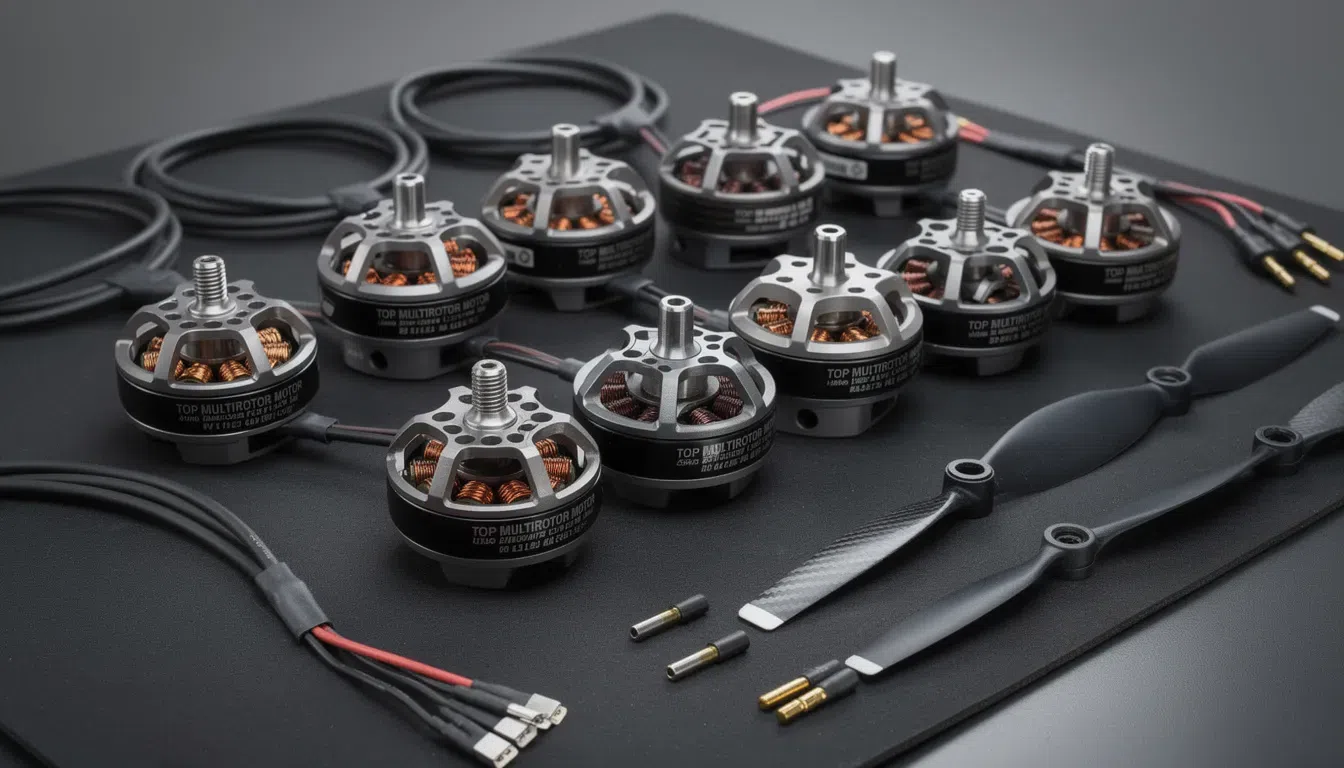
Introduction to Multirotor Motors This guide is designed for drone enthusiasts, builders, and professionals who
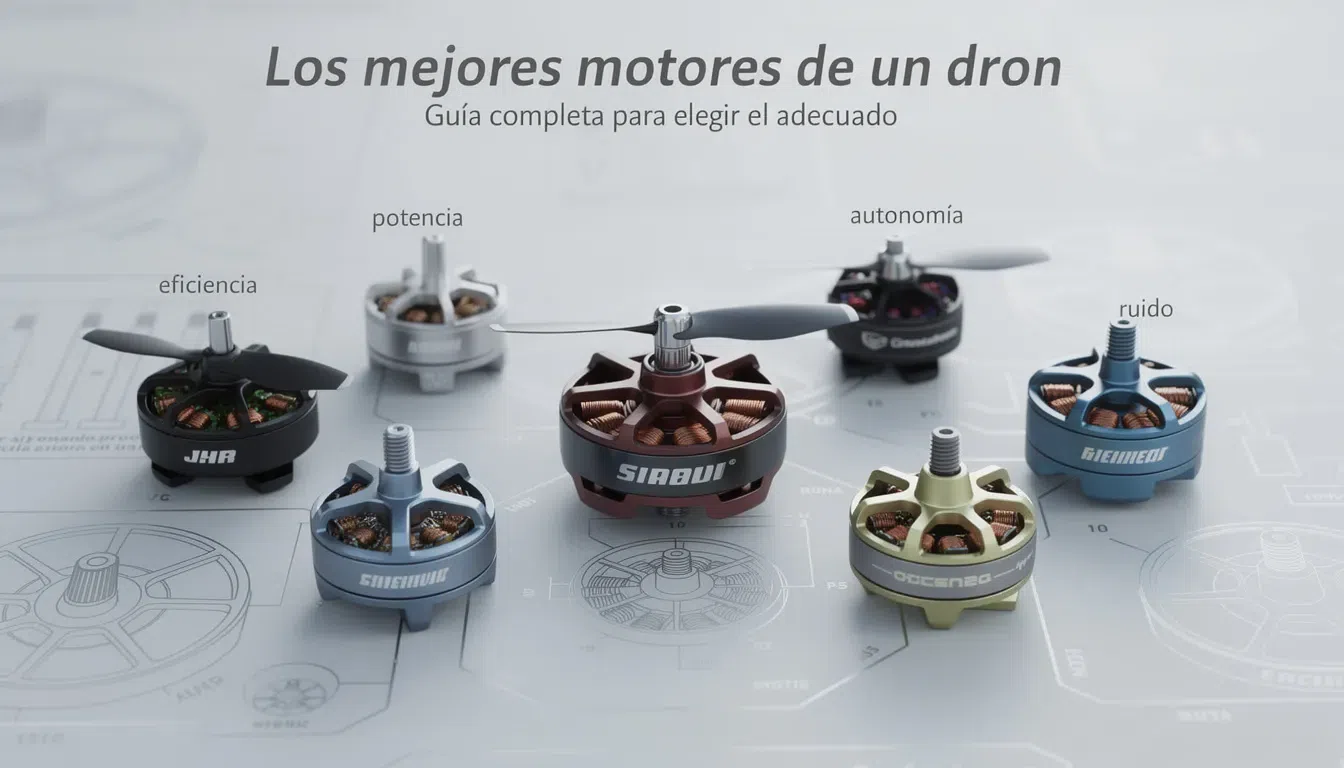
Los motores de un dron son piezas clave que afectan directamente la estabilidad del vuelo